Pathfinding Tutorial: AI Navigation for Game Characters
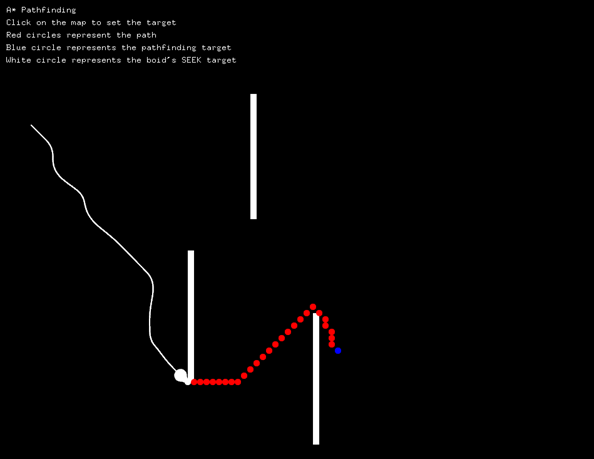
Ever wondered how game characters seem to effortlessly navigate complex environments, dodging obstacles and finding the quickest route to their destination? It's not magic, but rather the clever application of pathfinding algorithms. Let's dive into the fascinating world of AI navigation!
Creating believable and engaging AI behavior can be tricky. One of the biggest hurdles developers face is ensuring that non-player characters (NPCs) move intelligently and realistically through the game world. Nobody wants to see an enemy character getting stuck on a corner or running in circles!
This tutorial aims to provide a comprehensive guide to implementing pathfinding for game characters, focusing on practical techniques and algorithms that can be easily adapted to various game genres and engine.
We will explore the Aalgorithm, one of the most popular and effective pathfinding solutions. We'll also touch on other essential concepts, such as navigation meshes, obstacle avoidance, and smoothing techniques. Get ready to equip your game characters with the smarts they need to traverse your game world with style!
The AAlgorithm: Your Go-To Pathfinding Solution
The Aalgorithm is arguably the most popular choice for pathfinding in games, and for good reason. It's efficient, versatile, and relatively easy to understand. I remember when I first started tinkering with game development; I was determined to make my little goblin character navigate the dungeon I had built. I tried a simple "move towards the player" approach, but the goblin kept getting stuck on walls and generally looked like a fool. After some frustrating hours, I stumbled upon the Aalgorithm. It was like magic! Suddenly, my goblin was intelligently finding its way around obstacles, and it actually looked like it knew what it was doing. The Aalgorithm works by evaluating potential paths based on a cost function that combines the actual cost of moving from one node to another (g) with a heuristic estimate of the cost of reaching the goal from that node (h). This heuristic guides the search, allowing the algorithm to efficiently explore the most promising paths first. In essence, Ais like a smart explorer who always has a hunch about where the treasure is hidden. While there are other pathfinding techniques, such as Dijkstra's algorithm or Breadth-First Search, Aoften provides the best balance between performance and accuracy, especially in large and complex game worlds. By fine-tuning the heuristic function, you can further optimize the algorithm for specific game environments, making it even more efficient and adaptable. So, if you're looking for a robust and reliable pathfinding solution, Ais definitely a great place to start.
Navigation Meshes: Building a Walkable World
Before pathfinding can even begin, you need to define the "walkable" areas of your game world. This is where navigation meshes (navmeshes) come in. Navmeshes are essentially simplified representations of the game environment that tell the AI where they can move. Think of it as creating a roadmap specifically for your game characters. Instead of dealing with the complexities of the entire game world, the pathfinding algorithm can focus on navigating the navmesh, which significantly improves performance. Creating a navmesh typically involves analyzing the game geometry and generating a polygon mesh that represents the walkable surfaces. This can be done manually or automatically using tools provided by game engines like Unity or Unreal Engine. The key is to ensure that the navmesh accurately reflects the traversable areas of the game world while remaining relatively simple to optimize pathfinding calculations. A well-designed navmesh can dramatically improve the efficiency and accuracy of your AI navigation, allowing your characters to move smoothly and realistically through even the most complex environments. It also simplifies the process of defining areas where the AI should or shouldn't go, such as restricting them to certain paths or preventing them from entering specific zones. Therefore, investing time in creating a robust and accurate navmesh is crucial for achieving believable and engaging AI behavior. Remember, a good navmesh is the foundation of effective pathfinding.
Obstacle Avoidance: Dodging the Unexpected
Even with a perfect path planned, your AI characters will inevitably encounter unexpected obstacles. That's where obstacle avoidance comes in. Obstacle avoidance techniques allow your characters to dynamically adjust their path to avoid collisions with moving objects or changes in the environment. Imagine your game world is bustling with activity, with characters moving around and objects being moved. Static pathfinding alone will not be enough because path may change dynamically. Obstacle avoidance is about using sensors to detect obstacles in the character's path. These sensors might be raycasts, or more advanced techniques. When an obstacle is detected, the character adjusts its path to steer clear. This might involve slowing down, changing direction, or even stopping completely. The key is to make these adjustments feel natural and responsive, so the character doesn't appear jerky or unnatural. Sophisticated obstacle avoidance systems can also incorporate elements of group behavior, allowing characters to coordinate their movements to avoid collisions with each other. Imagine a group of soldiers moving through a narrow corridor – they'll need to adjust their positions to avoid bumping into each other. Implementing effective obstacle avoidance can be challenging, but it's essential for creating believable and engaging AI behavior. It's the difference between a character that feels like a mindless robot and one that seems to react intelligently to the world around it.
Smoothing Techniques: Making Movement Look Natural
After pathfinding, the raw path can look a bit jagged and unnatural. Smoothing techniques come into play to refine the path and create a more fluid and organic movement. Smoothing techniques help to eliminate sharp corners and abrupt changes in direction, resulting in a more believable and aesthetically pleasing movement. One common approach is to use spline interpolation, which involves fitting a smooth curve through the key points of the path. This creates a continuous and flowing trajectory that looks much more natural than a series of straight lines. Another technique is to apply a smoothing filter to the path, which averages out the positions of neighboring points to reduce sharp angles. The choice of smoothing technique will depend on the specific requirements of your game and the desired level of realism. However, the benefits are universal. Smooth movement not only looks better, but it can also improve gameplay by making characters feel more responsive and easier to control. By investing in smoothing techniques, you can elevate the overall quality of your AI navigation and create a more immersive and engaging gaming experience. Remember, it's the small details that often make the biggest difference in creating a polished and professional game.
Beyond A*: Exploring Alternative Pathfinding Methods
While Ais a solid choice, various situations call for different approaches. Consider games with vast open worlds. Hierarchical pathfinding breaks the map into regions, and then smaller areas. Agents first find the path to the destination region and then calculate an exact path in the smaller area. It can significantly reduce the computational burden of pathfinding in large environments. Another scenario involves dynamic environments where the map change. An agent needs to replan its route in order to reach its destination. Instead of recalculating from scratch when a change occurs, incremental pathfinding techniques reuse information from the previous search. An agent can efficiently update its path without significant delay. Furthermore, consider the situation where an agent is required to navigate a crowd of other agents. In this case, a simple Amay not be sufficient, because agents can't pass through each other. Velocity Obstacle is a method of determining the velocity of an agent that would lead to a collision, and then avoiding such velocities. Depending on your game requirements, you can determine the best pathfinding method for your game characters.
Optimization Tips: Making Pathfinding Run Smoothly
Pathfinding can be computationally intensive, especially in complex game worlds with many AI characters. Optimizing your pathfinding implementation is crucial for maintaining smooth performance. You want to ensure that your game doesn't slow down when characters calculate their path. One common optimization is to use a simplified representation of the game world for pathfinding. For instance, you might use a lower-resolution navmesh or a coarser grid. This reduces the amount of data that the pathfinding algorithm needs to process, improving its speed. Another optimization is to limit the number of pathfinding calculations per frame. Instead of having all characters calculate their paths simultaneously, you can stagger the calculations over multiple frames. This prevents performance spikes and ensures that the game remains responsive. Furthermore, you can use caching techniques to store frequently used paths. If a character needs to travel to the same location multiple times, you can reuse the cached path instead of recalculating it. By implementing these optimization techniques, you can significantly improve the performance of your pathfinding system, even in demanding game environments. The key is to profile your code and identify the areas where pathfinding is taking the most time. Then, focus your optimization efforts on those areas.
Pathfinding and Game Design: A Symbiotic Relationship
Pathfinding isn't just a technical problem; it's also a game design consideration. The way your characters navigate the world can have a significant impact on the overall player experience. Imagine a stealth game. If the enemies have poor pathfinding, it can be easy to exploit their weaknesses and avoid detection. On the other hand, if the enemies are too smart, it can make the game frustratingly difficult. Therefore, the pathfinding algorithm should be tailored to the specific gameplay mechanics and the desired level of challenge. Furthermore, pathfinding can be used to guide the player through the game world. For instance, you might use subtle cues in the environment to influence the player's path. You might place interesting objects or landmarks along the intended route, or you might use lighting and shadows to create a sense of direction. By carefully considering the relationship between pathfinding and game design, you can create a more immersive and engaging player experience. The key is to think about how the AI characters will interact with the world and how their movements will affect the player.
Fun Facts: The History and Evolution of Pathfinding in Games
The history of pathfinding in games is surprisingly rich and fascinating. Early games often relied on simple and rudimentary pathfinding techniques due to technological limitations. Think of Pac-Man, where the ghosts followed predefined patterns with limited AI. As computing power increased, more sophisticated pathfinding algorithms began to emerge. One of the earliest and most influential algorithms was Dijkstra's algorithm, which was developed in the 1950s. It provides solution by finding the shortest path from the start to every other node. As game worlds became more complex, the need for more efficient pathfinding algorithms became apparent. Awas developed in 1968, and it quickly became the standard choice for game developers. Aalgorithm takes into account both the actual cost of travel, and the estimated distance to the target. That method has allowed more complex environments to implement pathfinding without sacrificing performance. Today, pathfinding continues to evolve with the development of new techniques such as hierarchical pathfinding, influence maps, and learning-based approaches.
How to Implement APathfinding: A Step-by-Step Guide
Ready to get your hands dirty and implement the Aalgorithm? Let's walk through the key steps involved. First, you need to represent your game world as a graph of nodes. Each node represents a possible location, and the edges between nodes represent the possible movements. Second, you need to define a cost function for moving from one node to another. This might simply be the distance between the nodes, or it could take into account other factors such as terrain type or obstacles. Third, you need to define a heuristic function that estimates the distance from a given node to the goal node. The heuristic should be admissible, meaning that it never overestimates the actual distance. Finally, you need to implement the Aalgorithm itself. This involves maintaining a priority queue of nodes to explore, prioritizing nodes with the lowest estimated total cost. The algorithm continues until the goal node is reached, or the priority queue is empty. Once you've implemented these steps, you'll have a basic Apathfinding system. From there, you can start experimenting with different cost functions, heuristic functions, and optimization techniques to improve performance and accuracy.
What If Pathfinding Fails? Handling the Unexpected
Even with the best pathfinding system, there's always a chance that something can go wrong. An obstacle might suddenly appear in the path, or the goal might become unreachable. It's important to handle these situations gracefully to avoid unexpected behavior. One approach is to implement a fallback behavior. If the pathfinding algorithm fails to find a path, the character can simply stop moving, or it can try to find an alternative goal. Another approach is to use dynamic pathfinding. This involves continuously recalculating the path as the environment changes. This can be more computationally intensive, but it allows the character to adapt to unexpected events. Furthermore, you can implement error handling mechanisms to detect and log pathfinding failures. This can help you identify and fix bugs in your pathfinding implementation. By carefully considering the possible failure scenarios, you can create a more robust and reliable AI navigation system. The key is to anticipate the unexpected and provide your characters with a set of strategies for dealing with it.
Top 5 Pathfinding Mistakes to Avoid
Even experienced developers can fall victim to common pathfinding pitfalls. Here are five of the most common mistakes to avoid:
- Ignoring Performance: Pathfinding can be computationally intensive, so it's important to optimize your implementation.
- Neglecting the Navmesh: A poorly designed navmesh can lead to inaccurate pathfinding and unnatural movement.
- Overlooking Obstacle Avoidance: Characters should be able to dynamically avoid obstacles in their path.
- Forgetting Smoothing Techniques: Raw paths can look jagged and unnatural, so smoothing is essential.
- Not Handling Failures: Be prepared for situations where pathfinding fails and provide a fallback behavior.
By avoiding these mistakes, you can create a more robust and engaging AI navigation system. Remember, pathfinding is a complex problem, but with careful planning and attention to detail, you can create a truly impressive AI experience.
Question and Answer
Here are some common questions about pathfinding in games:
Question 1: What is the Aalgorithm?
Answer: Ais a pathfinding algorithm that finds the shortest path between two points by considering both the actual cost of travel and an estimated cost to the destination.
Question 2: What is a navmesh?
Answer: A navmesh is a simplified representation of the walkable areas in a game world, used for pathfinding.
Question 3: How can I optimize pathfinding performance?
Answer: Use simplified representations of the game world, limit calculations per frame, and cache frequently used paths.
Question 4: What are some common pathfinding mistakes?
Answer: Ignoring performance, neglecting the navmesh, overlooking obstacle avoidance, and forgetting smoothing techniques.
Conclusion of Pathfinding Tutorial: AI Navigation for Game Characters
Pathfinding is a cornerstone of believable and engaging AI in games. Mastering algorithms like A, understanding navigation meshes, and implementing obstacle avoidance and smoothing techniques are essential skills for any game developer. By carefully considering the principles outlined in this tutorial, you can create AI characters that navigate your game world with intelligence, realism, and style.
Post a Comment