Unity Lighting Tutorial: Advanced Lighting for Game Environments
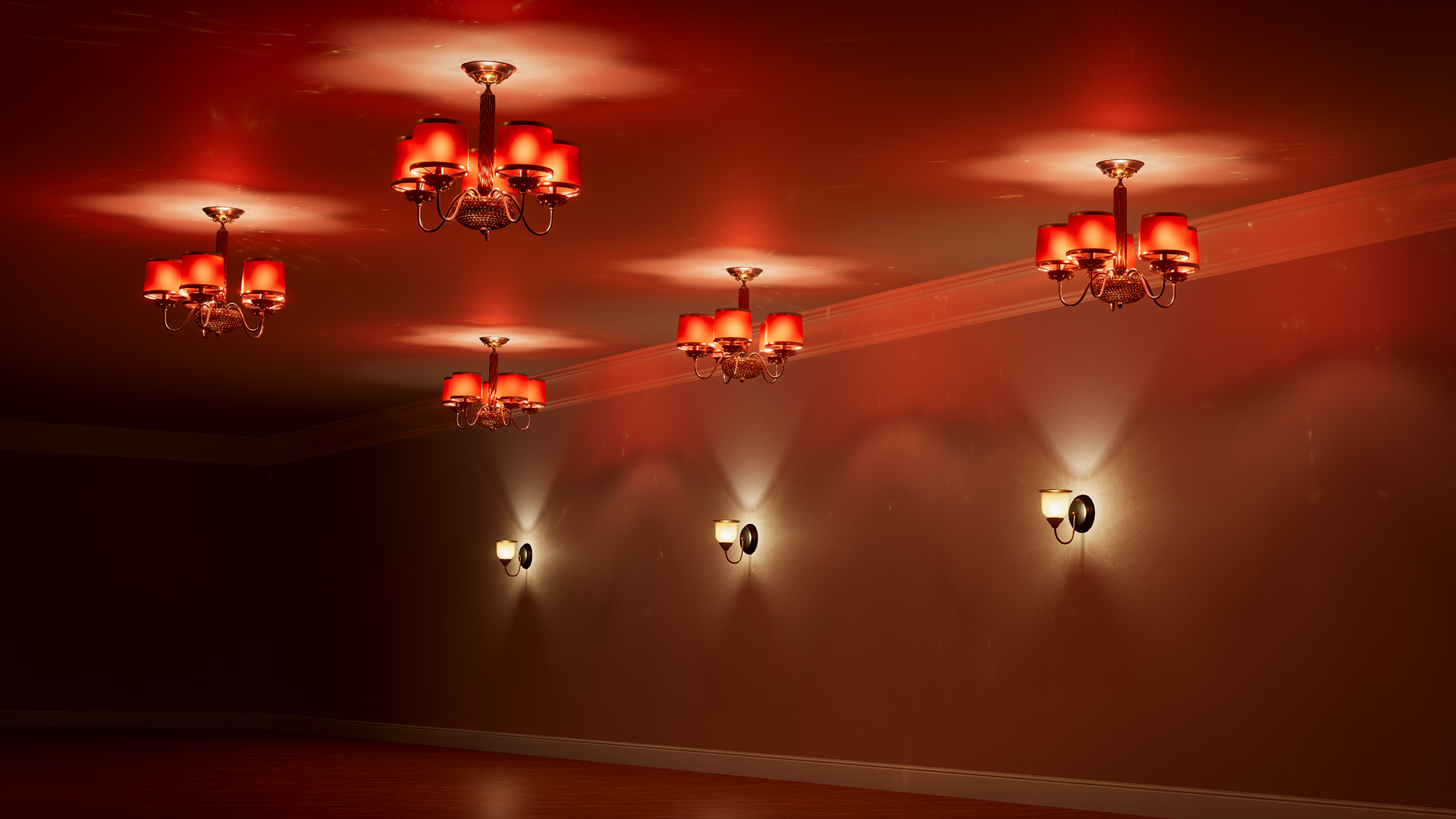
Imagine walking through a virtual forest where sunlight dapples through the leaves, casting realistic shadows that dance with the wind. Or perhaps you're exploring a dimly lit dungeon, the flickering torchlight revealing ancient secrets hidden in the stonework. Achieving such immersive and believable environments in your Unity games often hinges on mastering advanced lighting techniques.
Creating truly stunning and believable game worlds is tough. Default settings often leave your environments looking flat, artificial, and simply...unconvincing. Hours can be spent tweaking settings with minimal improvements, and complex concepts can feel overwhelming, leading to frustration and a feeling that your artistic vision is just out of reach.
This tutorial is your guide to elevating your Unity game environments through advanced lighting. We'll move beyond basic lighting setups and delve into techniques that bring depth, realism, and atmosphere to your creations. Get ready to unlock the power of light and shadow to transform your game worlds!
In this guide, we will explore advanced lighting techniques in Unity to create stunning game environments. We'll cover topics like light baking, post-processing effects, reflection probes, light probes and custom shaders to take control of your game's visuals. The goal is to equip you with the knowledge and skills to breathe life into your virtual worlds, achieving a level of visual fidelity that captivates your players and enhances their overall gaming experience. Keywords we will cover include: Unity lighting, light baking, reflection probes, light probes, post processing, custom shaders, game environment art, real-time lighting, global illumination.
Understanding Light Baking
The target of understanding light baking is to pre-calculate the lighting in your static environment so it does not cost performance during gameplay. Static elements like buildings, grounds, or non-movable props will hold their lighting data as textures generated by the process. You can set options to choose the best quality of these textures, giving you the best tradeoff between quality and performance. When I first started working with Unity, I didn’t understand the concept of light baking. I thought real-time lighting was the only way to go! My game ran terribly, especially on mobile devices. I remember one scene, a simple room with a few lights, brought my frame rate crashing down. It was only after some research that I stumbled upon light baking. The difference was night and day. Suddenly, my frame rate was smooth, and my scene looked even better because I could afford to use higher-quality settings. Light baking involves pre-calculating how light interacts with static objects in your scene. This information is then stored in lightmaps, which are textures applied to the static geometry. By baking the lighting, you reduce the real-time processing needed during gameplay, resulting in significant performance gains, especially on less powerful hardware. The process involves setting your objects to "static," adjusting the baking settings (resolution, indirect samples, etc.), and then initiating the bake. Unity offers various baking options, including Baked Indirect, Shadowmask, and Subtractive modes, each with its own advantages depending on your desired effect and target platform. Light baking is essential for achieving realistic lighting without sacrificing performance, particularly in scenes with complex geometry and numerous light sources. Understanding this powerful technique unlocks the potential for visually stunning games that run smoothly on a wide range of devices. When paired with carefully placed reflection probes, the static scene truly comes to life.
Leveraging Reflection Probes
Reflection Probes capture a snapshot of the environment around them and apply that reflection to nearby objects. They are extremely valuable for enhancing the realism of your game. Reflection probes in Unity are components that capture a spherical view of their surroundings and store it as a cubemap. This cubemap is then used to provide realistic reflections on nearby objects. Unlike screen space reflections (SSR), reflection probes provide accurate reflections even for objects that are not currently visible in the camera's view. This is crucial for creating believable materials, especially those with metallic or glossy surfaces. They are also helpful for adding realism to water surfaces. The effectiveness of reflection probes hinges on their placement and settings. The position should be strategic, capturing the most relevant environmental details. Settings like intensity, resolution, and refresh mode (realtime or baked) need to be tuned to match the specific requirements of the scene and the target platform. For instance, in a scene with dynamic elements, a real-time reflection probe might be necessary, but it comes with a performance cost. Baked reflection probes, on the other hand, are suitable for static environments and offer better performance. It’s also worth noting that you can blend multiple reflection probes to create smoother transitions between different reflection environments. For example, you might have a probe inside a room and another outside, and Unity will seamlessly blend the reflections as the player moves between the two areas. Using reflection probes effectively can drastically improve the visual quality of your game, adding a layer of realism and immersion that would be difficult to achieve with other techniques.
The History and Myth of Light Probes
Light probes, while seemingly technical, have a fascinating history rooted in the desire to simulate light accurately in computer graphics. The concept stems from global illumination techniques, which aim to model how light bounces and interacts within a scene. The early days of game development often relied on simplified lighting models due to hardware limitations. But as processing power increased, so did the ambition to create more realistic and immersive environments. Light probes emerged as a powerful solution for capturing and re-using pre-computed lighting information in dynamic scenes. The myth surrounding light probes often involves the perception that they are difficult to use or that they offer only marginal visual improvements. In reality, while they do require some understanding of their underlying principles, light probes are relatively straightforward to implement and can drastically enhance the realism of dynamic objects within a scene. They work by sampling the lighting environment at specific points in space and storing this information as spherical harmonics. Dynamic objects that move through the scene can then interpolate the lighting data from nearby probes, creating a smooth and believable lighting effect that accurately reflects the surrounding environment. Properly utilizing light probes requires careful placement to ensure adequate coverage of the dynamic areas of your scene. Think of them as strategically positioned sensors that capture the ambient light. The density of probes should be higher in areas where the lighting changes rapidly or where dynamic objects move frequently. While light probes are not a magic bullet, they are an invaluable tool for bridging the gap between static and dynamic lighting, ultimately leading to more visually compelling and immersive game experiences. By understanding their history and dispelling the myths surrounding them, you can confidently incorporate light probes into your workflow and elevate the visual fidelity of your games.
Unlocking the Secrets of Post-Processing
The "secret" to impactful post-processing lies in understanding how to use it subtly and strategically to enhance, rather than overwhelm, the existing visual style of your game. Many novice developers fall into the trap of cranking up every setting to the maximum, resulting in a garish and unnatural look. The key is to use post-processing as a fine-tuning tool, adding subtle touches that complement the lighting, textures, and overall art direction. One often overlooked aspect of post-processing is color grading. This involves adjusting the color balance of the entire scene to create a specific mood or atmosphere. By subtly shifting the hues, saturation, and brightness, you can dramatically alter the emotional impact of your game. For example, a warm color palette might evoke feelings of nostalgia or comfort, while a cool color palette could create a sense of unease or isolation. Another powerful post-processing effect is ambient occlusion (AO). This adds subtle shadows to the crevices and corners of objects, creating a sense of depth and grounding the scene in reality. However, it's important to use AO sparingly, as excessive use can lead to a muddy and unrealistic look. Bloom is another popular effect that can add a soft, ethereal glow to bright areas of the scene. This is particularly effective for creating a sense of magic or wonder. However, too much bloom can be distracting and make the scene look washed out. The secret to successful post-processing is to experiment with different settings and combinations until you find a balance that enhances the overall visual experience without being overpowering. Remember, the goal is to make the game look better, not just different.
Recommendations for Custom Shaders
My top recommendation for diving into custom shaders is to start small and build up your knowledge gradually. Don't try to create a complex, cutting-edge shader right away. Instead, begin with simple effects like a basic color tint or a subtle texture animation. This will allow you to grasp the fundamentals of shader programming without getting overwhelmed. Another recommendation is to make use of online resources and tutorials. There are countless websites, forums, and video tutorials that offer valuable guidance and inspiration. Unity's official documentation is also an excellent resource, providing detailed information on shader syntax, functions, and best practices. One of the most effective ways to learn custom shaders is by dissecting existing shaders. Unity provides a variety of built-in shaders that you can examine to understand how they work. You can also find free or commercially available shaders online that you can study and modify to suit your needs. Don't be afraid to experiment! Shader programming is all about trial and error. Try changing different parameters, adding new lines of code, and seeing what happens. This is the best way to learn how different effects are achieved. Finally, consider using a visual shader editor like Shader Graph. This tool allows you to create shaders using a node-based interface, without having to write any code. It's a great way to get started with shader programming, and it can also be a valuable tool for more experienced shader artists. By following these recommendations, you can gradually build your skills and create stunning custom shaders that will elevate the visual quality of your games. Remember, learning shader programming takes time and practice, but the results are well worth the effort.
Real-Time vs. Baked Lighting: A Deeper Dive
Real-time lighting calculates the lighting of your scene every frame, meaning that changes to lights or objects are immediately reflected in the scene. This allows for dynamic lighting effects, such as moving lights, changing light colors, and objects casting real-time shadows. The downside of real-time lighting is its performance cost. Calculating the lighting every frame can be computationally expensive, especially in scenes with many lights or complex geometry. This can lead to lower frame rates, particularly on less powerful hardware. Baked lighting, on the other hand, pre-calculates the lighting of your scene and stores the results in lightmaps. This means that the lighting information is static and does not change during gameplay. Baked lighting is much more performant than real-time lighting, as the lighting calculations are only done once during the baking process. However, baked lighting does not support dynamic lighting effects. Objects must be marked as static to participate in the baking process, and any changes to the lights or objects after the bake will not be reflected in the scene. When choosing between real-time and baked lighting, it's important to consider the specific needs of your game. If you need dynamic lighting effects, real-time lighting is the only option. However, if your scene is mostly static, baked lighting will provide much better performance. It's also possible to use a combination of real-time and baked lighting. For example, you could bake the lighting for the static parts of your scene and use real-time lighting for dynamic objects. This allows you to get the best of both worlds: good performance and dynamic lighting effects. Ultimately, the best choice depends on the specific requirements of your game and the target hardware.
Essential Tips for Optimized Lighting
One crucial tip for optimized lighting in Unity is to carefully manage your light count. Each light you add to a scene increases the rendering cost, so it's important to use only the lights that are necessary to achieve the desired effect. Consider using baked lighting for static elements whenever possible, as this significantly reduces the real-time lighting calculations. Another important tip is to optimize your shadow settings. Shadows can be very expensive to render, especially at high resolutions. Experiment with different shadow resolutions and shadow distances to find a balance between visual quality and performance. Also, consider using shadow cascades to improve shadow quality at different distances from the camera. Use light cookies to create interesting lighting effects without adding additional lights. Light cookies are textures that are projected through a light source, allowing you to simulate complex lighting patterns and shadows. This is a much more efficient way to create these effects than using multiple lights. Use occlusion culling to prevent Unity from rendering objects that are not visible to the camera. This can significantly improve performance, especially in scenes with many objects. Occlusion culling works by determining which objects are hidden behind other objects and preventing them from being rendered. Finally, profile your game regularly to identify any performance bottlenecks related to lighting. Unity provides a profiler that allows you to see how much time is being spent on different parts of the rendering pipeline. This can help you identify areas where you can optimize your lighting to improve performance. By following these tips, you can create visually stunning and optimized lighting in your Unity games.
Understanding Lightmap Resolution and Its Impact
Lightmap resolution is the number of texels (texture pixels) used to store the baked lighting information for a given area in your scene. Higher lightmap resolutions result in more detailed and accurate lighting, but they also increase the memory footprint and baking time. Lower lightmap resolutions, on the other hand, are more performant but can lead to artifacts like blocky shadows and inaccurate lighting. Choosing the right lightmap resolution is a balancing act between visual quality and performance. There's no one-size-fits-all answer, as the optimal resolution depends on the specific characteristics of your scene, the target platform, and the desired visual fidelity. Generally, larger objects and areas with intricate lighting details require higher lightmap resolutions, while smaller objects and areas with simpler lighting can get away with lower resolutions. It's also important to consider the UV layout of your objects. If your UVs are poorly optimized, even a high lightmap resolution won't be able to compensate for the stretching and distortion. In such cases, you may need to adjust your UVs to ensure that they are properly aligned and scaled for lightmapping. Experimentation is key to finding the right lightmap resolution for your scene. Start with a relatively low resolution and gradually increase it until you're satisfied with the visual quality. Keep an eye on the memory usage and baking time, and try to find a resolution that provides a good balance between quality and performance. Unity provides various tools to help you visualize and optimize your lightmap resolution, such as the Lightmap Resolution view in the Scene view and the Lightmap Editor window. By understanding the impact of lightmap resolution and using these tools effectively, you can achieve stunning and optimized lighting in your Unity games.
Fun Facts About Advanced Unity Lighting
Did you know that the techniques used in advanced Unity lighting have their roots in film and animation? Concepts like light baking and global illumination are borrowed from traditional rendering pipelines, adapted for real-time use in games. It's fascinating how game developers constantly push the boundaries of technology to replicate the visual fidelity of movies. Another fun fact is that the human eye is incredibly sensitive to subtle changes in lighting. Even small improvements in lighting quality can have a significant impact on the perceived realism and immersion of a game environment. This is why mastering advanced lighting techniques is so important for creating compelling and believable game worlds. The use of light probes and reflection probes can sometimes lead to unexpected results. For example, if a light probe is placed in a brightly lit area, it can cause dynamic objects to appear overly bright, even when they are in shadow. Similarly, a poorly placed reflection probe can create unrealistic reflections that detract from the overall visual quality. It's important to carefully consider the placement and settings of these probes to avoid these issues. Advanced lighting techniques are constantly evolving. New features and tools are being added to Unity all the time, making it easier than ever to create stunning visual effects. Keeping up with the latest advancements is essential for staying at the forefront of game development. Finally, remember that lighting is not just about technical skills. It's also about artistic vision. A deep understanding of light and shadow, color theory, and composition is essential for creating truly captivating game environments. By combining technical expertise with artistic sensibility, you can create games that are not only visually impressive but also emotionally engaging.
How to Implement Global Illumination
Implementing global illumination (GI) in Unity involves several steps, starting with understanding the different GI modes available. Unity offers both baked GI and real-time GI, each with its own advantages and limitations. Baked GI pre-computes the lighting and stores it in lightmaps, resulting in excellent performance but limited dynamic lighting. Real-time GI, on the other hand, calculates the lighting in real-time, allowing for dynamic lighting effects but at a higher performance cost. To implement baked GI, you need to mark your static objects as "static" in the Inspector. This tells Unity that these objects will not move during gameplay and can participate in the baking process. Next, you need to configure the lighting settings in the Lighting window (Window > Rendering > Lighting). Here, you can adjust parameters like the lightmap resolution, indirect samples, and environment lighting. Once you've configured the settings, you can initiate the baking process by clicking the "Generate Lighting" button. For real-time GI, you need to enable the "Realtime Global Illumination" option in the Lighting window. You can also adjust parameters like the indirect intensity and bounce boost to control the appearance of the GI. In addition to baked and real-time GI, Unity also offers mixed lighting modes that combine the benefits of both. For example, the "Subtractive" mode allows you to bake the indirect lighting while still using real-time direct lighting. Implementing GI effectively requires careful planning and experimentation. It's important to consider the specific needs of your game and the target platform when choosing the GI mode and configuring the lighting settings. By understanding the different options available and experimenting with different settings, you can achieve stunning and realistic lighting in your Unity games.
What If We Didn't Have Reflection Probes?
Imagine a world without reflection probes. What would that look like in our Unity games? Well, for starters, anything shiny would look decidedly less…shiny. Metallic surfaces would appear dull and lifeless, lacking that crucial specular highlight that brings them to life. Water surfaces would be flat and unconvincing, failing to reflect the surrounding environment in a realistic way. The overall visual quality of our games would suffer, and the sense of immersion would be significantly reduced. Without reflection probes, we would be forced to rely on other techniques to simulate reflections, such as screen space reflections (SSR). SSR can be effective in some cases, but it has several limitations. It only reflects objects that are currently visible in the camera's view, and it can produce artifacts when the camera moves or when objects occlude each other. Reflection probes, on the other hand, provide accurate reflections even for objects that are not currently visible, and they are much more robust to camera movement and occlusion. Another alternative to reflection probes is to use a single, global reflection cubemap. This cubemap would capture the overall environment lighting and provide a basic level of reflection for all objects in the scene. However, this approach would lack the detail and accuracy of reflection probes, as it would not account for local variations in the environment. Without reflection probes, achieving realistic and convincing reflections would be much more difficult and time-consuming. We would have to rely on less accurate and more limited techniques, and the overall visual quality of our games would inevitably suffer. Reflection probes are an essential tool for creating visually stunning and immersive game environments, and their absence would be sorely missed.
Top 5 Advanced Lighting Techniques in Unity
Here is a listicle about the top 5 Advanced Lighting Techniques in Unity:
- Light Baking: Pre-calculate lighting for static objects to boost performance. By saving the scene in textures, the game will not calculate these lights.
- Reflection Probes: Capture environmental reflections for realistic shiny surfaces. Without this, the water would look terrible.
- Light Probes: Capture environmental lighting for dynamic objects moving through the scene. Make the lights follow the actors!
- Post-Processing: Fine-tune the visual look of your game with effects like bloom, color grading, and ambient occlusion. Polish those lights!
- Custom Shaders: Create unique and stylized lighting effects with custom shader code.
Each of these techniques can significantly enhance the visual quality of your Unity games. Light baking optimizes performance by pre-calculating lighting for static objects, while reflection probes and light probes add realism to reflections and dynamic lighting. Post-processing allows you to fine-tune the overall look of your game, and custom shaders enable you to create unique and stylized lighting effects. Mastering these techniques will elevate your game environments and captivate your players.
Question and Answer
Here are some frequently asked questions about advanced lighting in Unity:
Q: What is the difference between baked lighting and real-time lighting?
A: Baked lighting pre-calculates the lighting and stores it in lightmaps, resulting in excellent performance but limited dynamic lighting. Real-time lighting calculates the lighting in real-time, allowing for dynamic lighting effects but at a higher performance cost.
Q: How do I use reflection probes?
A: Place reflection probes in your scene to capture environmental reflections. Adjust the probe's settings, such as resolution and intensity, to achieve the desired effect. Make sure that objects you want to have reflections have reflective materials.
Q: What are light probes used for?
A: Light probes capture environmental lighting for dynamic objects moving through the scene. They allow dynamic objects to blend seamlessly with the baked lighting environment.
Q: How can I improve the performance of my lighting?
A: Use baked lighting for static objects, optimize shadow settings, use light cookies instead of multiple lights, and use occlusion culling to prevent Unity from rendering hidden objects.
Conclusion of Unity Lighting Tutorial: Advanced Lighting for Game Environments
By mastering the advanced lighting techniques discussed in this guide, you can transform your Unity game environments into visually stunning and immersive worlds. From understanding light baking and leveraging reflection probes to unlocking the secrets of post-processing and creating custom shaders, you now have the tools and knowledge to elevate your game's visuals to the next level. Remember to experiment, iterate, and continuously learn to stay at the forefront of game development. The power to create breathtaking and captivating game experiences is now in your hands.
Post a Comment