Code Review for Games: Quality Assurance in Game Programming
Imagine your dream game, meticulously crafted, bursting with innovative features, and poised to captivate players worldwide. But lurking beneath the surface, hidden within lines of code, are potential bugs that could shatter the player experience. This is where code review steps in, acting as a crucial safeguard for game development success.
The path to a polished game is rarely smooth. Deadlines loom, pressure mounts, and sometimes, crucial details get overlooked. Perhaps a memory leak creeps in, or a seemingly innocuous piece of code introduces unexpected behavior. These are the sorts of challenges that can plague even the most talented development teams.
Code review, specifically tailored for game development, is a process of systematically examining source code to identify potential issues before they make their way into the final product. It aims to ensure code quality, maintainability, and adherence to coding standards, all contributing to a smoother, more enjoyable gaming experience for players.
This article explores the vital role of code review in game development, highlighting its significance in ensuring code quality, preventing bugs, fostering collaboration, and improving overall game quality. We will delve into practical tips, real-world examples, and address common misconceptions surrounding this essential practice, demonstrating how code review contributes significantly to a game's success. The discussion will include quality assurance, bug detection, coding standards, collaboration, and game development workflows.
The Importance of Code Review in Game Development
In my early days of game programming, I worked on a project where time was always of the essence. We were a small team, constantly pushing to meet deadlines, and code review often felt like a luxury we couldn't afford. I remember submitting a feature I was particularly proud of – a complex AI system for enemy characters. Confident in my work, I skipped the code review step, eager to see it in action. Big mistake! During testing, the AI went haywire, causing enemies to behave erratically, breaking the game's balance, and frustrating our testers. After hours of debugging, another senior programmer finally spotted a subtle logical error in my code that had gone unnoticed. It was a humbling experience, but it taught me a valuable lesson: even the most experienced developers make mistakes, and code review is an invaluable safety net. Code reviews are crucial in game development, as they ensure quality, maintainability, and robustness. The collaborative nature of code review also promotes shared knowledge and helps prevent future issues by catching errors early on. It enforces adherence to coding standards, leading to more consistent and understandable code across the project. This reduces the risk of bugs and improves the overall quality of the game.
What is Code Review for Games?
Code review for games isn't just about finding typos or style inconsistencies; it's a deep dive into the logic, performance, and security of the code that drives the game. It's a process where developers meticulously examine each other's code, looking for potential bugs, performance bottlenecks, security vulnerabilities, and adherence to coding standards. It's about ensuring that the code is not only functional but also efficient, maintainable, and secure. It involves critical analysis of logic, data structures, and algorithms to catch errors or potential optimizations. It also focuses on aspects like resource management (memory, CPU usage), concurrency issues, and platform-specific considerations to provide a complete perspective. Code review can involve static analysis tools, automated testing, and manual inspection. It is an integral part of software development, improving the overall quality and reliability of the final product, which in our case, is a game.
The History and Myths of Code Review in Games
The concept of code review predates modern software development methodologies. In the early days of computing, when programs were smaller and development teams even smaller, informal code walkthroughs were common. As software development evolved, formal code inspection processes emerged, driven by the increasing complexity of systems and the need for higher reliability. Myths surrounding code review often involve the belief that it's a waste of time, slows down development, or is only necessary for junior developers. Some might think that automated testing is enough, eliminating the need for human review. However, code review offers insights beyond automated testing's capabilities. It can catch logical errors, design flaws, and maintainability issues that automated tools might miss. It also provides a shared understanding of the codebase, which is crucial for team collaboration and long-term project success. Overcoming these myths requires demonstrating the tangible benefits of code review in terms of reduced bugs, improved code quality, and enhanced team knowledge.
Hidden Secrets of Code Review in Games
One often overlooked aspect of code review is its potential to foster knowledge sharing within the development team. When developers review each other's code, they gain exposure to different coding styles, problem-solving approaches, and areas of the game's codebase. This cross-pollination of knowledge can lead to a more well-rounded and skilled team. It can also promote consistency in coding practices, making the codebase easier to understand and maintain over time. Another secret lies in the power of psychological safety. A culture of trust and respect within the team encourages developers to openly share their code and receive feedback without fear of judgment. This creates an environment where learning and growth are prioritized, leading to higher quality code and a more positive development experience. Moreover, code review can serve as a valuable training tool, especially for junior developers, who can learn best practices and gain insights from more experienced team members.
Recommendations for Code Review in Games
To maximize the effectiveness of code review, it's essential to establish clear guidelines and processes. This includes defining coding standards, establishing a review workflow, and setting expectations for review quality. Coding standards provide a common language for the team, making it easier to understand and maintain the code. A well-defined review workflow ensures that code reviews are conducted consistently and efficiently. Setting expectations for review quality helps reviewers focus on the most important aspects of the code, such as correctness, performance, and security. It is recommended to use tools that automate parts of the code review process, like static analysis and automated testing, so reviewers can focus on more complex issues. Additionally, encouraging a culture of constructive feedback and continuous improvement helps team members to grow and improve their coding skills. Finally, remember that code review is not just about finding bugs; it's also about sharing knowledge, improving code quality, and fostering collaboration within the team.
Practical Techniques for Effective Code Review
Effective code review requires a combination of technical skills and soft skills. On the technical side, reviewers should have a strong understanding of the programming language, the game's architecture, and the relevant coding standards. They should also be familiar with common bug patterns and security vulnerabilities. On the soft skills side, reviewers should be able to provide constructive feedback in a clear and respectful manner. They should also be able to actively listen to the author's explanations and ask clarifying questions. One useful technique is to approach the code as if you were going to maintain it yourself. This encourages you to think about the code's long-term maintainability and identify potential issues that could arise in the future. Another technique is to focus on the most critical areas of the code first, such as those that handle user input, network communication, or sensitive data. By prioritizing these areas, you can maximize the impact of your review and reduce the risk of serious bugs or security vulnerabilities.
Tips for Conducting Excellent Code Reviews
One of the most crucial things you can do to improve your code reviews is to be prepared. Before diving into the code, take some time to understand the purpose of the changes and the context in which they were made. Read the associated issue or bug report, and familiarize yourself with the relevant code areas. This will allow you to focus your attention on the most important aspects of the code and provide more insightful feedback. Another essential tip is to be specific in your feedback. Instead of saying "This code is bad," explain exactly what you find problematic and suggest concrete ways to improve it. For example, you might say "This loop could be optimized by using a different algorithm" or "This variable should be renamed to be more descriptive." Being specific makes your feedback more actionable and helps the author understand exactly what needs to be changed. Finally, remember to be respectful and constructive in your feedback. Code review is a collaborative process, and the goal is to help each other improve. Avoid using harsh language or making personal attacks. Instead, focus on the code itself and offer your suggestions in a positive and supportive manner.
Understanding the Code Review Process
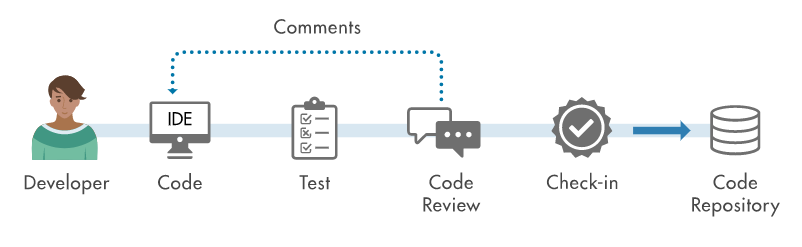
The code review process typically involves several steps. First, the author of the code submits their changes for review, usually via a version control system like Git. The reviewers then examine the code, looking for potential issues and providing feedback. This feedback can be delivered through comments in the code review tool, or in person during a code review meeting. Once the author has addressed the feedback, they resubmit the code for review. This process continues until the reviewers are satisfied that the code meets the required standards. The exact steps and tools used may vary depending on the organization and the project, but the basic principles remain the same. It is crucial to have clearly defined roles and responsibilities for both the author and the reviewers. The author is responsible for writing clear, concise, and well-documented code, while the reviewers are responsible for providing thorough and constructive feedback. By following a well-defined process, you can ensure that code reviews are conducted consistently and effectively.
Fun Facts About Code Review in Games
Did you know that some game development studios incorporate code review into their company culture by holding "code review parties," complete with snacks and friendly competition? This can make the process more engaging and less intimidating, fostering a more positive and collaborative environment. Another fun fact is that many well-known games contain Easter eggs or hidden messages embedded in the code, which are sometimes discovered during code review. These hidden gems can add a touch of humor and personality to the game, and they demonstrate the creativity and attention to detail of the developers. Furthermore, some studios have gamified the code review process by awarding badges or points for finding bugs or providing helpful feedback. This can motivate developers to participate actively in code review and improve their skills. Code review can be seen as an important part of game creation by understanding the quality of the code.
How to Perform a Code Review for Games
Performing a code review for games involves several key steps. First, familiarize yourself with the purpose of the code and the requirements it's meant to fulfill. Understand the feature being implemented, the bug being fixed, or the performance improvement being made. Next, review the code for correctness, ensuring it accurately implements the intended functionality. Look for logical errors, off-by-one errors, boundary conditions, and potential edge cases that might lead to unexpected behavior. Pay close attention to resource management, especially memory allocation and deallocation, to avoid leaks or inefficiencies. Also, focus on security vulnerabilities, such as injection flaws or insecure data handling. Assess the code's performance, identifying potential bottlenecks and suggesting optimizations. Look for opportunities to reduce CPU usage, memory consumption, or network traffic. Finally, evaluate the code's readability and maintainability, ensuring it follows coding standards and is well-documented. This process helps improve the overall quality of a game.
What If Code Review is Skipped in Games?
Skipping code review in game development can have severe consequences. Without code review, bugs are more likely to slip through the cracks and make their way into the final product. These bugs can range from minor annoyances to game-breaking glitches that ruin the player experience. Imagine a game with a critical bug that prevents players from progressing past a certain level, which can lead to negative reviews, refunds, and damage to the game's reputation. Performance problems can also go undetected, resulting in a sluggish and unresponsive game. This can be particularly detrimental for fast-paced action games or games with complex simulations. Security vulnerabilities can also be missed, leaving the game vulnerable to cheating, hacking, or even data breaches. In addition, neglecting code review can lead to a decline in code quality over time, making the codebase harder to maintain and extend. This can increase development costs and slow down future development efforts. Code review is essential to the success of the code.
Listicle: Top 5 Benefits of Code Review for Games
Here are the top 5 benefits of code review in game development:
- Improved Code Quality: Code review helps identify and eliminate bugs, performance bottlenecks, and security vulnerabilities, resulting in higher quality code.
- Reduced Development Costs: By catching bugs early in the development process, code review can prevent costly rework and delays later on.
- Enhanced Team Collaboration: Code review promotes knowledge sharing and collaboration within the development team, leading to a more cohesive and effective workforce.
- Better Knowledge Transfer: Code review facilitates knowledge transfer from experienced developers to junior developers, helping to train the next generation of game programmers.
- Increased Confidence: Code review provides a safety net, ensuring that the code is thoroughly vetted and meets the required standards, giving the team increased confidence in their work.
Question and Answer
Q: Why is code review important for game development?
A: Code review is crucial because it helps identify bugs, performance issues, and security vulnerabilities before they make it into the final game. It also ensures code quality, maintainability, and adherence to coding standards.
Q: Who should be involved in code review?
A: Ideally, multiple developers with different levels of experience should participate in code review. This ensures that different perspectives are considered and that potential issues are identified from various angles.
Q: How often should code review be performed?
A: Code review should be performed regularly, ideally as part of the development workflow. Small, frequent reviews are generally more effective than large, infrequent reviews.
Q: What tools can be used for code review?
A: Many tools are available for code review, including static analysis tools, code review platforms like Git Hub and Git Lab, and collaborative development environments.
Conclusion of Code Review for Games: Quality Assurance in Game Programming
In conclusion, code review is an indispensable practice in game development. It’s not merely a formality, but a critical investment in quality assurance that ultimately contributes to the success of a game. By embracing code review, game development teams can mitigate risks, foster collaboration, and deliver exceptional gaming experiences to players around the world. Remember, a well-reviewed codebase is a strong foundation for a great game.
Post a Comment